Intelligent vision for quantitative microscopy
Teach microscopes
to see, measure, and understand.
MicroVision AI is a modular intelligence framework for generating, enhancing, and analyzing microscopy image pipelines—turning difficult experimental data into reliable quantitative insight.
LIVE MICROSCOPY PIPELINE
FRAME 083 / 200
OBJECTS87
MODEMulti-particle
01 / PROJECT OVERVIEW
A complete intelligence layer
for experimental imaging.
MicroVision AI connects simulation, augmentation, neural networks, optical models, and analysis in one coherent environment—so researchers can build task-specific microscopy solutions without starting from zero.
The challenge
Microscopy images are noisy, diverse, and often difficult to label. Traditional analysis can require brittle thresholds and extensive manual tuning.
The MicroVision AI approach
Compose realistic optical simulations, generate training data, train modern models, and convert predictions into quantitative measurements in a single modular pipeline.
The outcome
Rapid prototyping of robust workflows for localization, tracking, segmentation, counting, characterization, and image generation.
02 / VISUAL EVIDENCE
See the intelligence
inside every frame.
The visual demonstrations below showcase the platform across ideal, noisy, single-object, and multi-object microscopy scenarios.
LIVE Multiple particle tracking
A
Multi-particle tracking at scale
From dense microscopy footage to structured object-level data: detect many particles, localize their positions, and preserve identities across time.
CONTROLIdeal conditions
Clear signal
Precise localization when contrast and illumination are favorable.
STRESS TESTNoisy conditions
Signal under pressure
Learned tracking can remain useful under low signal-to-noise and unstable illumination.
TRAJECTORY RECONSTRUCTION
From detections
From detections
to scientific motion.
MicroVision AI does not stop at finding objects. Its ecosystem supports linking detections across time and transforming image sequences into interpretable trajectories.
x, yPosition
tTime
ΔrDisplacement
 010203
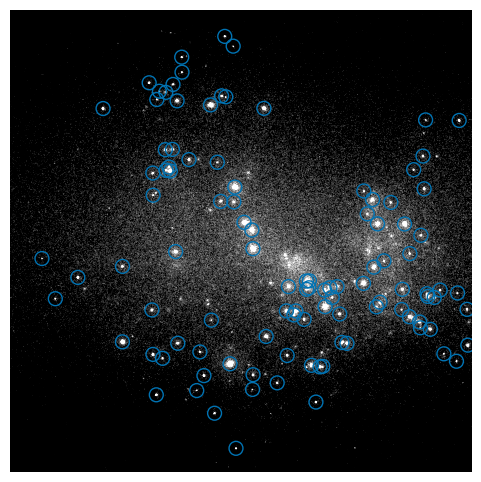
REAL DATA EXAMPLE
Quantum dots in low SNR imagery
The detection example shows many localized targets against a complex, uneven background—exactly the type of visual environment where learning-based approaches become valuable.
- 01 Multiple detections in a single field
- 02 Spatial localization over variable intensity
- 03 Analysis-ready object coordinates
03 / CAPABILITIES
One framework.
Many scientific jobs.
A modular toolbox for building end-to-end solutions across image generation, learning, detection, and physical characterization.
SIMULATION ENGINE
Generate training data before the experiment exists.
Compose particles, optics, aberrations, noise, and motion to create controlled synthetic datasets with known ground truth.
Composable by design
Build reusable, property-aware transformations instead of fragile one-off scripts.
Physics in the loop
Model scatterers, holography, aberrations, noise, and other imaging effects.
Self-supervised object detection
Detect objects without conventional point-by-point annotation workflows.
Graph intelligence for motion
Use graph-neural-network methods to link particles, trace cells, and characterize spatiotemporal behavior.
Measure what matters
Convert pixels into locations, counts, radii, refractive indices, mass estimates, and trajectories.
04 / WORKFLOW
From physical idea
to trained intelligence.
A clear development loop that bridges microscopy physics and modern deep learning.
01
DEFINE
Model the scene
Describe particles, cells, optics, noise, and motion using modular features.
02
GENERATE
Create data + labels
Produce realistic training examples with exact ground-truth properties.
03
TRAIN
Learn the task
Train CNNs, U-Nets, and other PyTorch-based models for the desired output.
04
DEPLOY
Analyze real images
Run inference, quantify results, and iterate against experimental data.
import microvision as mv

# Compose a synthetic microscopy scene
particle = mv.Sphere(radius=500e-9, position=lambda: np.random.rand(2) * 64)
optics = mv.Fluorescence(NA=1.4, magnification=10, resolution=1e-6)
image_pipeline = optics(particle) + mv.Poisson(snr=20)

# Resolve images and known properties for training
image = image_pipeline.update().resolve()
05 / APPLICATIONS
Built for real scientific
questions—not demo labels.
The platform supports experimental videos, synthetic data, self-supervised detection, and graph-based tracking.
Single-particle tracking
Localize a target over time—even in low-signal or unstable imaging conditions.
TrackingLocalization
Multi-particle tracking
Detect many objects per frame and reconstruct their motion through a sequence.
U-NetDense scenes
Cell counting
Transform fluorescence or brightfield images into repeatable object counts.
CellsQuantification
3D holographic tracking
Infer depth-aware positions from holographic image signatures.
3DHolography
Particle characterization
Estimate physical properties such as size, refractive index, or mass proxies.
PhysicsRegression
Synthetic image generation
Use generative models and optical simulation to expand scarce microscopy datasets.
GANsSimulation
06 / PRESENTATION VALUE
A foundation for smarter instruments.
MicroVision AI can sit above an imaging instrument as a software intelligence layer—helping transform raw frames into automated measurements, visual evidence, and repeatable workflows.
01
Higher-value workflows Add AI-assisted tracking, counting, and characterization to instrument demonstrations.
02
Faster proof-of-concepts Simulate data and prototype algorithms before collecting large labeled datasets.
03
Research flexibility Adapt the same framework to particles, cells, holography, fluorescence, and custom optics.
 INTELLIGENT · MODULAR · RESEARCH-GRADE
From pixels to knowledge.
MicroVision AI makes advanced quantitative microscopy more programmable, reproducible, and accessible.
Powered with ❤️ by Solicitous ®